


Impact
Apeiro Baremetal Operating System (BOS)
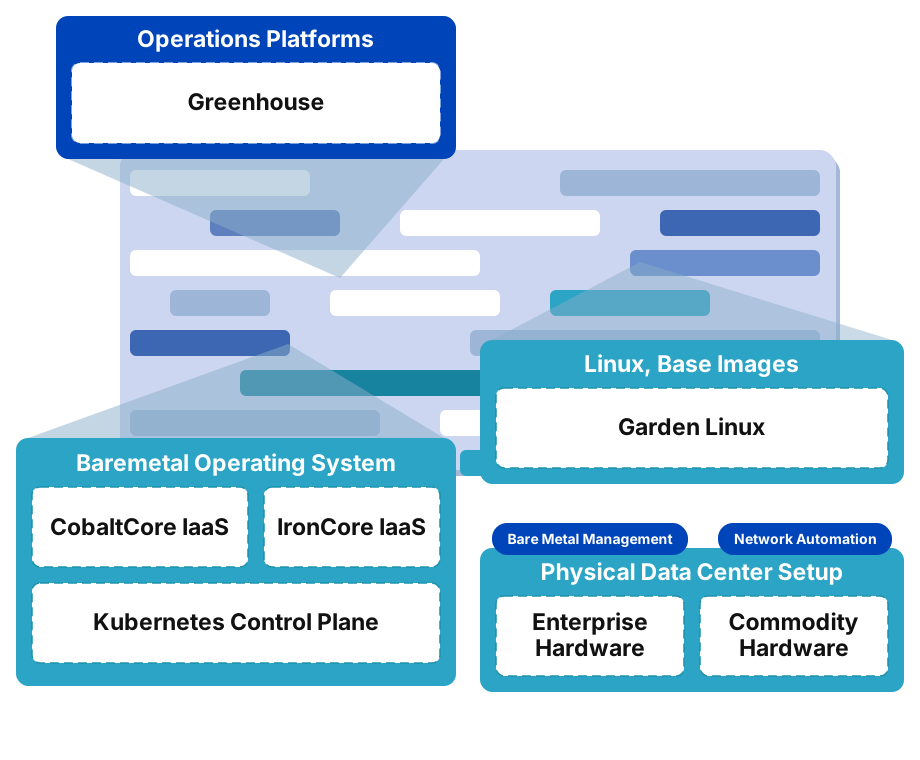
On the infrastructure layer, we offer stacks to manage cloud or edge infrastructure, a management dashboard, and flexibility with the supported hardware. Our offering is powered by a fully open-source, sovereign cloud blueprint, ensuring total control and transparency over your infrastructure.
Leveraging the Kubernetes Resource Model, our infrastructure layer provides declarative APIs for managing cloud infrastructure. Compared to traditional infrastructure solutions, this approach enables automated lifecycle management, significantly reducing the operational overhead associated with tasks such as scaling, patching, and upgrading infrastructure components. Building on a unified foundation for bare metal hardware management and storage we offer two Infrastructure-as-a-Service (IaaS) implementations:
- IronCore, a cloud-native infrastructure platform composed of three integrated layers: Bare Metal Management for server lifecycle management, Network Automation for Kubernetes-based network device provisioning and configuration, and Infrastructure as a Service for declarative management of compute, storage, and networking resources. IronCore is designed for cloud-native workloads that benefit from ephemeral, Kubernetes-native infrastructure.
- CobaltCore, an opinionated OpenStack distribution providing an IaaS layer and API also for non-cloud-native workloads. It is designed to support existing workloads requiring backward compatibility with established IaaS interfaces, VM live migration, or traditional network configurations. CobaltCore can optionally build on IronCore’s Bare Metal Management and Network Automation for a fully integrated, end-to-end stack. CobaltCore offers fully automated, zero-downtime maintenance operations focusing on system uptime and backward compatibility.
Both IaaS platforms expose dedicated APIs for infrastructure interaction. Consumers can access these APIs directly, bypassing Gardener, which suits existing toolchains, direct infrastructure operations, or workloads that do not require Kubernetes orchestration. Gardener, the open-source Kubernetes cluster lifecycle manager, uses the same APIs as its provisioning target: it translates declarative cluster specifications into IaaS requests, enabling fully automated Kubernetes cluster creation and lifecycle management. The direct path prioritizes compatibility and low-level control, while the Gardener path adds a Kubernetes-native abstraction layer that automates the complete cluster lifecycle.
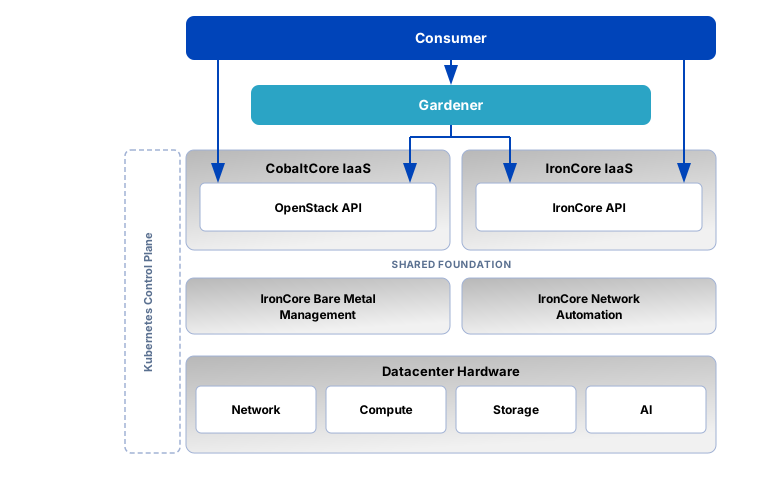
Both IronCore components described below form a shared foundation that IronCore and CobaltCore can optionally build on.
Bare Metal Management is part of IronCore’s product family, providing a comprehensive solution for managing physical servers in a Kubernetes-native way. It leverages Kubernetes Custom Resource Definitions (CRDs) to automate every aspect of bare-metal server management, ensuring smooth, scalable, and reliable operations.
- Discovery: Automatically detect and register bare metal servers, ensuring seamless integration into the infrastructure.
- Provisioning: Deploy and configure servers using Ignition, automating OS installation and ensuring servers are quickly ready for use.
- Day-2 Operations: Manage BIOS, firmware, and hardware inventory declaratively, keeping the fleet compliant and up to date without manual intervention.
- 3rd Party Integrations: Seamlessly integrate with existing vendor-specific management tools.
- Kubernetes Support: Run Kubernetes on bare metal servers with support for Cluster API and Gardener.
Network Automation is another component in IronCore’s product family, providing Kubernetes-native provisioning and configuration of network devices. It automates the full network lifecycle from device discovery to ongoing configuration management.
- Device Discovery: Automatically detect and register network devices into the Kubernetes-managed inventory.
- Provisioning: Deploy initial switch and router configurations, ensuring devices are ready for workloads without manual setup.
- Configuration Management: Continuously reconcile network device state declaratively, keeping configurations consistent and auditable across the fleet.
